F1 Savannah Cat: Costs, Traits, and Ownership
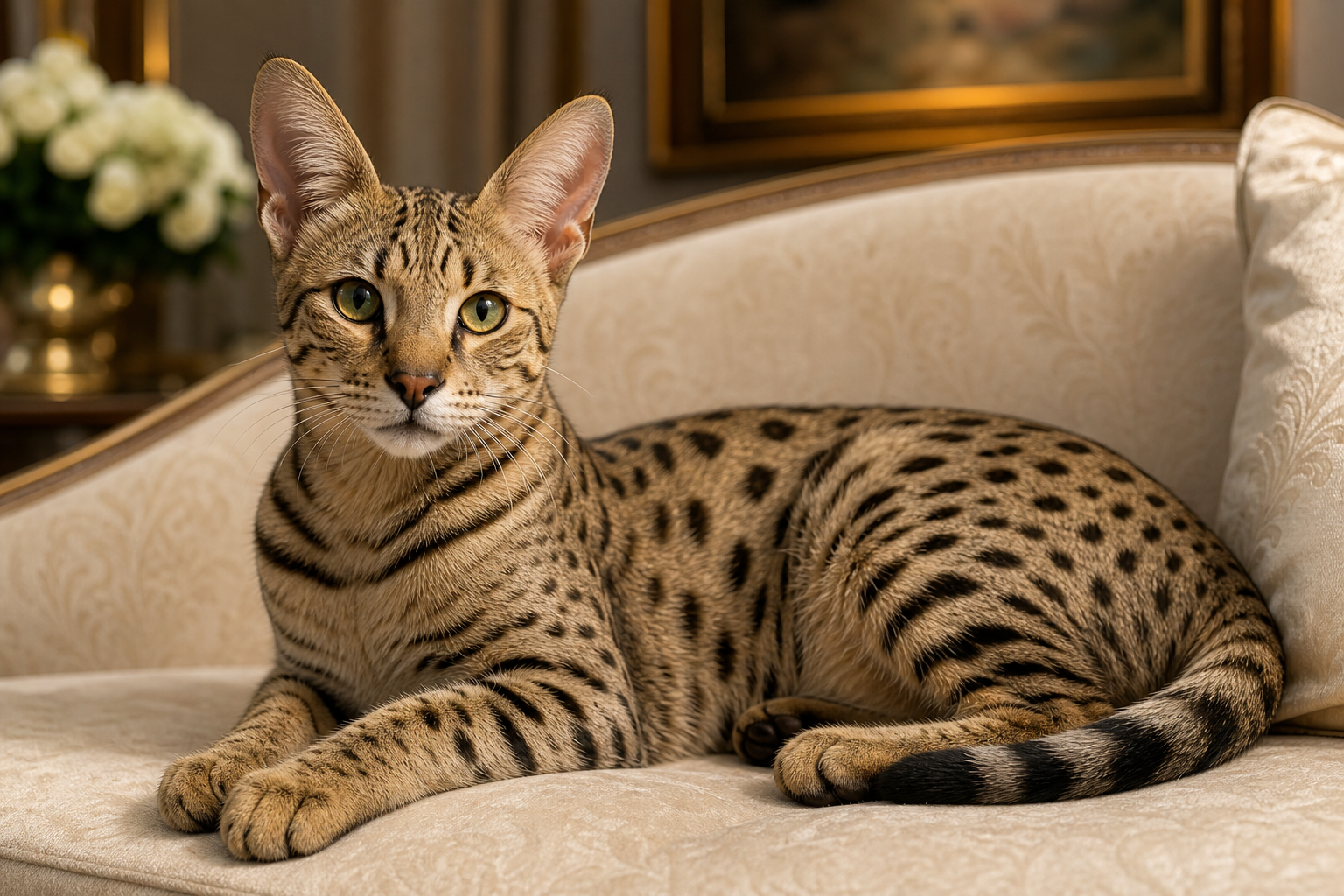
F1 Savannah Cat: Costs, Traits, and Ownership
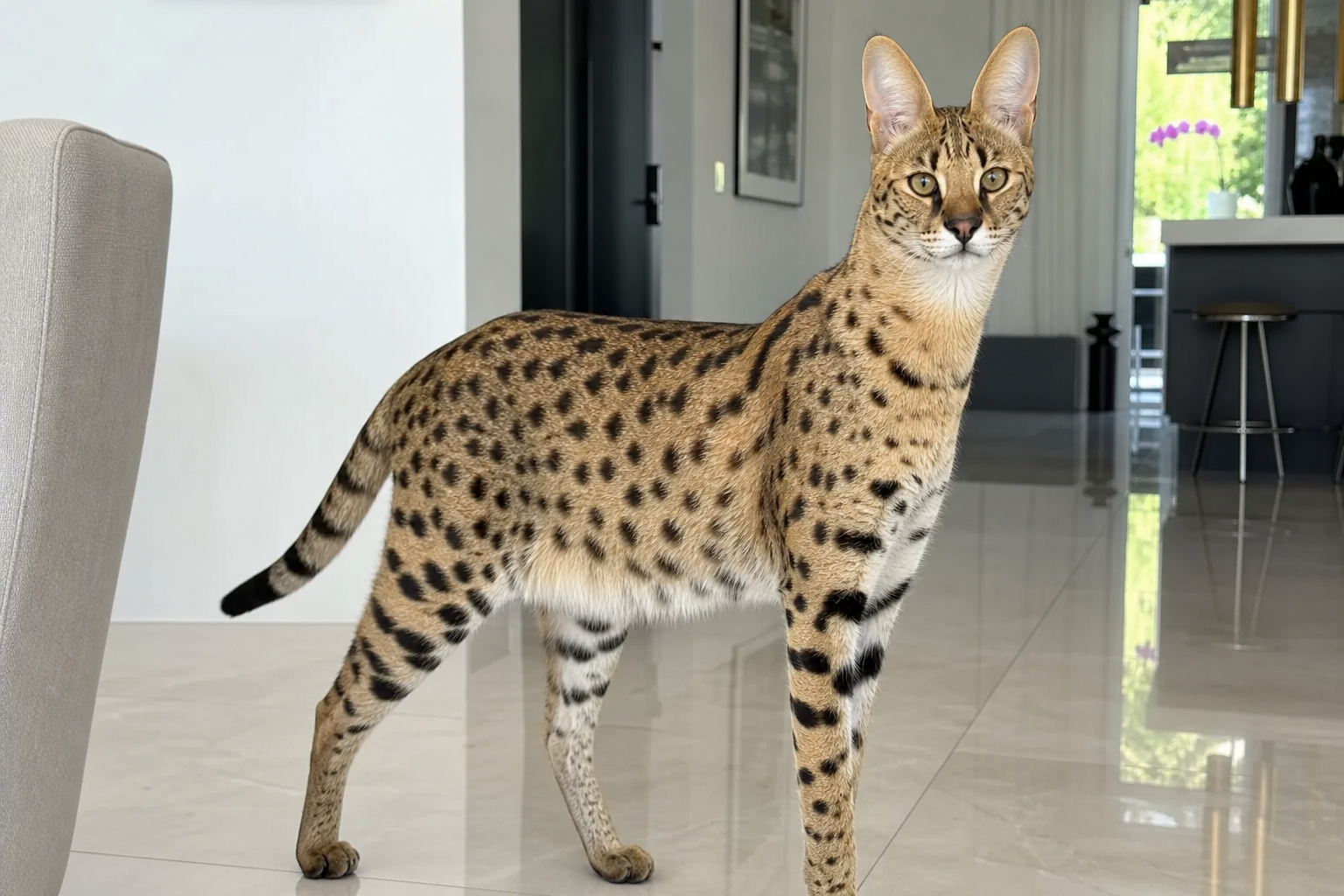
If you are researching an F1 Savannah cat, you are not looking for an ordinary pet. You are evaluating a rare serval hybrid with exceptional size, intelligence, athleticism, and exclusivity - along with a price point and ownership commitment that demand serious planning. For affluent buyers in the USA, Dubai, and international markets, the real question is not just what is an F1 Savannah, but whether its care, legal status, and long-term cost fit your lifestyle.
At Elite Hybrid Cats, a TICA-registered cattery (TICA #115454), we speak with buyers who want clear answers before making a premium acquisition. This guide explains what an F1 Savannah actually is, how it compares with F2-F5 generations, what an F1 Savannah price looks like in real life, and how to judge whether this extraordinary cat belongs in your home.
Quick answer: What should I pay for an F1 Savannah kitten?
A true F1 Savannah cat is the first-generation cross between an African serval and a domestic cat, typically representing the highest serval influence sold in domestic ownership.
For reputable, health-focused breeding programs, a standard F1 Savannah price commonly falls in the $15,000-$25,000 range.
A Savannah HP F1 from premium bloodlines at Elite Hybrid Cats typically ranges from $20,000-$50,000.
An F1 is best for buyers with space, time, budget, and prior experience with high-energy animals.
Compared with F2-F5 generations, an F1 usually has greater size, stronger prey drive, more intensity, and more demanding social needs.
The true F1 Savannah cost includes far more than purchase price: shipping, veterinary setup, premium diet, enrichment, and legal compliance all matter.
"According to The International Cat Association (TICA), the Savannah cat is considered a domestic breed but remains illegal in some states and countries due to its serval ancestry. Prospective owners should check local and state laws for any ownership restrictions." - TICA
What an F1 Savannah cat actually is
An F1 Savannah cat is the first filial generation produced from an African serval x domestic cat pairing. In practical buyer language, that means you are looking at the earliest and most exotic domestic-ownership generation in the Savannah line.
This is why F1s look so distinctive: very tall ears, long legs, dramatic height, bold spotting, and a more intensely exotic outline than later generations. It is also why they cost more and require more sophisticated ownership than lower-generation Savannahs.
TL;DR: who an F1 is for
An F1 Savannah is usually a fit for:
Buyers who specifically want the closest domestic ownership experience to a serval look
Households with room, routine, and daily engagement time
Owners comfortable with premium annual care costs
People who understand that this is not a calm, low-maintenance lap cat
An F1 is usually not ideal for:
Someone wanting a quiet, highly predictable beginner cat
Homes with unsecured small pets like birds, rabbits, or rodents
Buyers in restrictive legal jurisdictions
Owners who are away most of the day with minimal interaction time
F1 Savannah price: what you should expect to pay
For serious buyers, the most important distinction is between internet fantasy pricing and credible breeder pricing. Ethical breeding, early socialization, veterinary oversight, and legally compliant transport all cost real money.
Verified Elite Hybrid Cats pricing
Product line | Typical price range |
|---|---|
$20,000-$50,000 | |
$15,000-$25,000 | |
$7,500-$15,000 |
If you see an alleged F1 Savannah for a fraction of these prices, treat that as a serious red flag. Either the generation is misrepresented, the paperwork is incomplete, the health standards are weak, or the listing is a scam.
Why F1 Savannah cats cost so much
Competitor content often mentions rarity, but buyers need a fuller explanation. An F1 costs more because of:
Breeding complexity: first-generation pairings are difficult and low-volume
Small litter sizes: early generations often produce fewer kittens
Intensive early socialization: hand-raised, home-socialized kittens require significant labor
Health screening and veterinary expense
Transport and compliance costs
Demand for rare bloodlines and premium appearance
For premium buyers seeking exceptional quality, factors such as serval expression, structure, ear size, contrast, and rare colors like silver, golden, and melanistic black can influence price within a breeder’s established range.
The real cost of ownership beyond the purchase price
The purchase price is only the opening investment. A realistic F1 Savannah cost analysis should include setup and annual ownership.
Initial first-year costs
Expense category | Estimated range (USD) |
|---|---|
Kitten purchase | $15,000-$50,000 |
Shipping / delivery / export | $500-$3,500+ |
Initial veterinary exams and baseline labs | $300-$1,000 |
Vaccinations / microchip / records review | Often included, but budget $150-$400 |
Premium climbing furniture / cat wheel / enrichment | $800-$3,000 |
Secure room or enclosure modifications | $1,500-$10,000+ |
Harnesses, carriers, travel setup | $200-$800 |
Ongoing yearly costs
Expense category | Estimated yearly range (USD) |
|---|---|
Premium food / raw or high-meat diet | $1,800-$4,500 |
Routine veterinary care | $500-$1,500 |
Insurance or emergency reserve | $600-$2,500+ |
Enrichment replacement / toys / climbing systems | $400-$1,500 |
Professional pet sitting or specialized boarding | $1,000-$5,000+ |
Price in AED and EUR
For international buyers, approximate planning ranges are:
$15,000-$25,000 USD ≈ AED 55,000-92,000 or EUR 13,800-23,000
$20,000-$50,000 USD ≈ AED 73,000-184,000 or EUR 18,400-46,000
Exchange rates change, so buyers in Dubai or the EU should confirm the current conversion before wire transfers or import planning.
Traits of an F1 Savannah cat
An F1 Savannah is prized because it combines luxury-level rarity with unmistakable physical presence. But those same traits come with intensity.
Size and physical presence
An adult F1 Savannah commonly falls around:
Weight: roughly 12-25 lbs / 5.4-11.3 kg
Height: often visibly taller than a typical domestic cat, with long legs and an elevated rear stance
Lifespan: about 12-20 years
They often look even larger than their weight suggests because of their height, leg length, and lean muscular build.
"Servals can leap up to 3 meters (approximately 9.8 feet) into the air, and a single pounce may span 3 to 6 meters." - Marwell Zoo
That athletic ancestry is part of what makes F1 Savannah ownership so different from owning a standard house cat.
Temperament
An F1 Savannah is typically:
Highly alert
Intensely curious
Strongly bonded to selected people
Very active
Sometimes suspicious with strangers at first
Often more interactive than a typical cat
These cats do not simply occupy a room. They participate in it. They notice everything, test boundaries, and often want to be involved in household movement.
Vocalization and communication
F1s can be quite expressive. Beyond standard meowing, owners often report:
Chirping
Trilling
Hissing that is not always aggressive
Attention-seeking vocal routines
This is especially important for buyers who expect a quiet pet. An F1 Savannah is better understood as a highly communicative animal than a silent decorative exotic.
Prey drive
This is one of the biggest content gaps in competitor articles: prey drive is not a footnote. It materially affects household suitability.
An F1 Savannah may not be safe with:
Pet birds
Hamsters
Guinea pigs
Rabbits
Fish in accessible open-top tanks
Even in well-socialized cats, instinct remains significant.
Bonding style
F1s often form deep bonds, but not always in the soft, passive way people imagine. Many prefer to stay near you, follow you, supervise you, or initiate activity rather than simply sleep in your lap for hours.
Ownership realities: what daily life is actually like
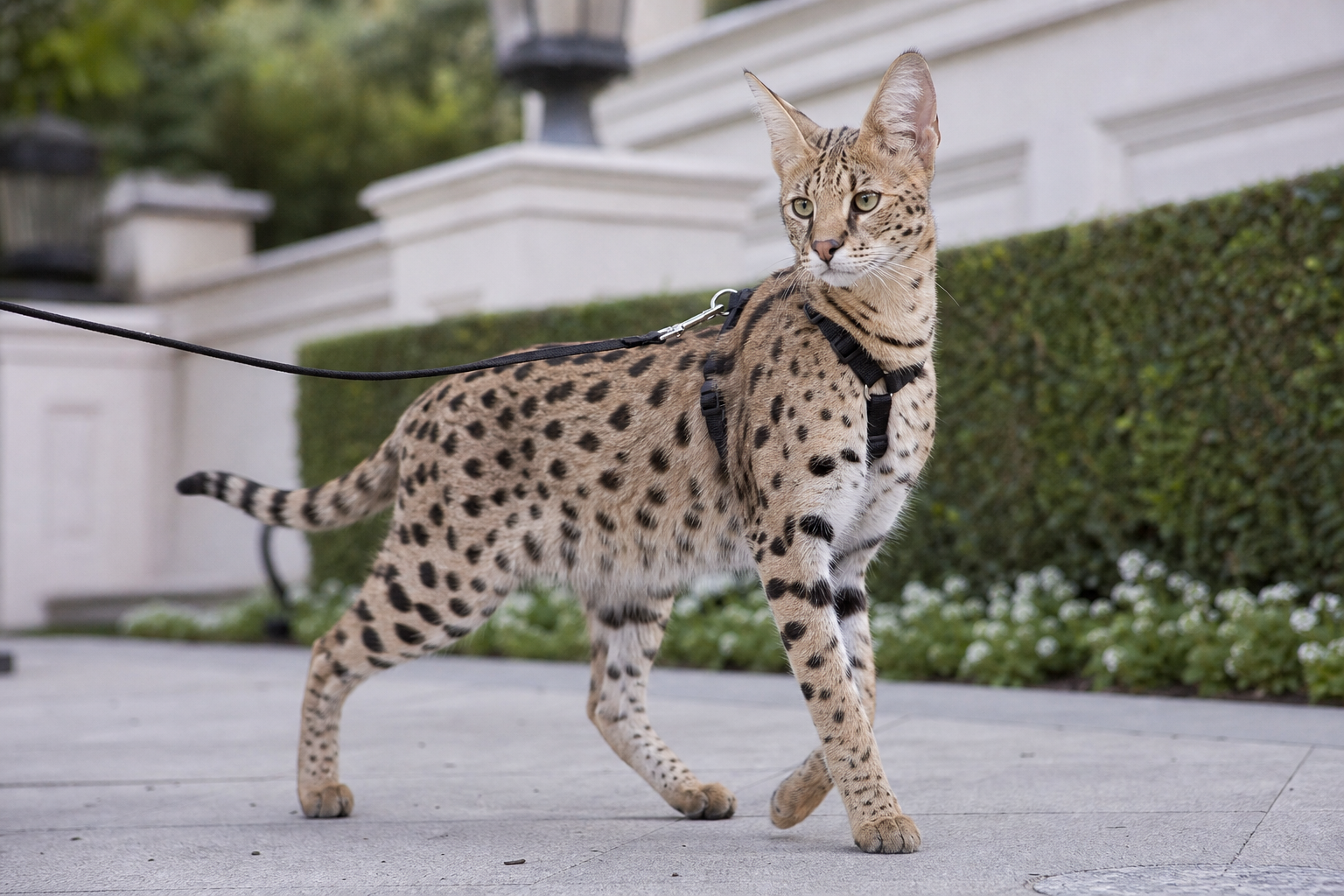
The best F1 ownership advice is simple: plan for a high-performance animal, not a standard cat with spots.
Space requirements
An F1 can adapt to indoor living, but only if the environment is truly enriched. Think vertical territory, climbing zones, viewing points, and room to move. In premium homes, a dedicated cat room, safe outdoor enclosure, or large open-plan space is a strong advantage.
Exercise needs
Budget at least 1-3 hours of active engagement per day, split across play, climbing, exploration, and interactive routines. This can include:
Wand play
Fetch
Puzzle feeders
Leash or harness work
Rotating enrichment stations
A bored F1 Savannah is far more likely to become destructive, vocal, or obsessive.
Socialization
This is where breeder quality matters enormously. Home-raised kittens socialized from birth have a significantly better start. Even then, continued owner effort is essential. A well-adjusted F1 usually comes from both strong breeder foundations and consistent owner handling.
Diet: raw vs premium kibble
Most serious owners evaluate either:
A carefully balanced raw or fresh diet, or
A premium, high-animal-protein commercial food
The key is not trend-following. It is nutritional quality, consistency, and veterinary oversight. An F1 does not need a fashionable feeding theory; it needs an appropriate carnivore-focused diet supported by your veterinarian and breeder guidance.
F1 vs F2-F5: why generation changes everything
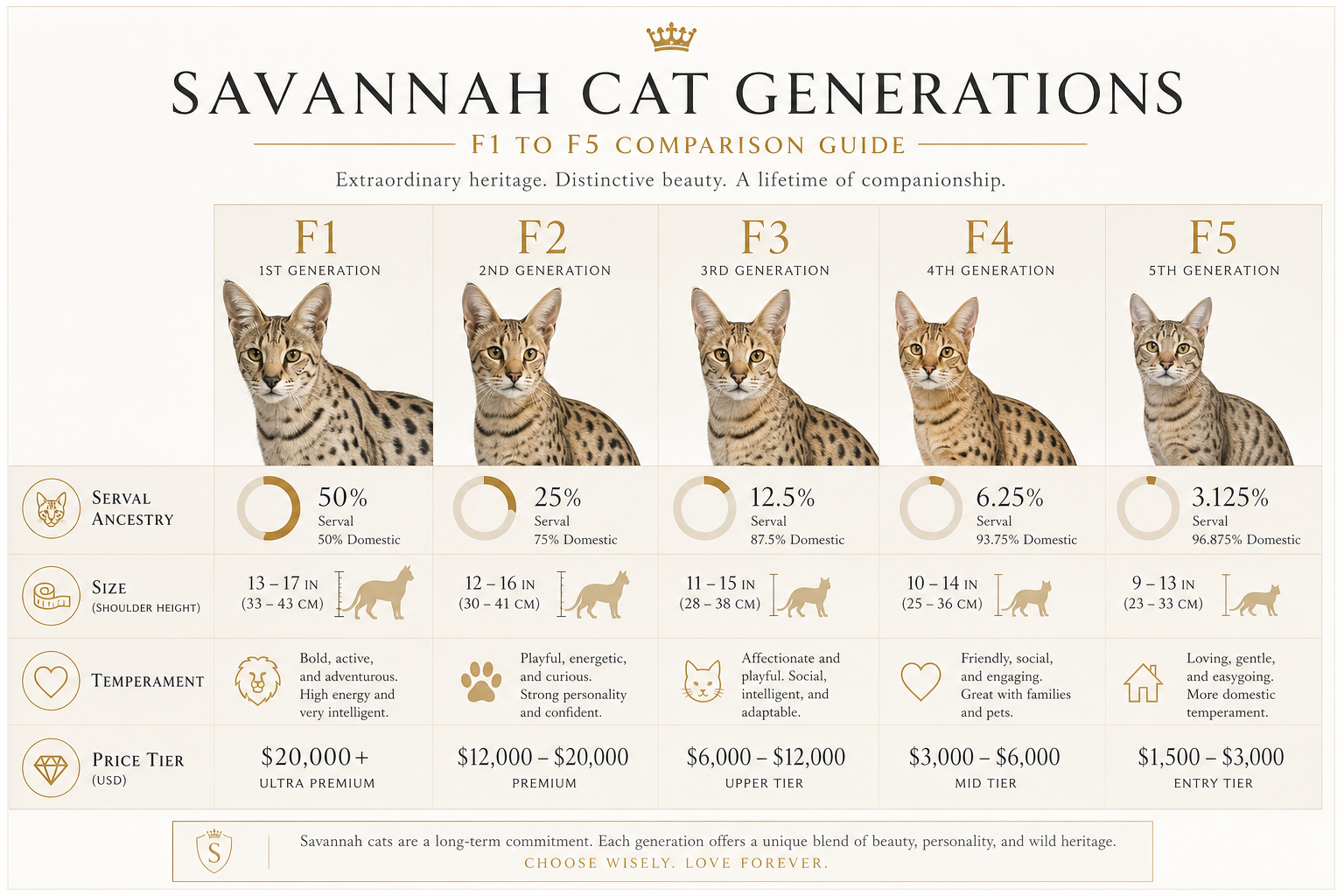
This is one of the biggest buyer decision points. Many people think they want an F1 when they may actually be better suited to an F2 or later.
Generation | Typical price | Exotic intensity | Care demand | Best fit |
|---|---|---|---|---|
F1 | $15,000-$25,000 | Highest | Highest | Experienced, highly committed buyers |
HP F1 | $20,000-$50,000 | Highest premium tier | Highest | Buyers seeking top-tier rarity and serval expression |
F2 | $7,500-$15,000 | High | High but more manageable | Serious buyers wanting strong Savannah character with lower intensity |
F3-F5 | Varies by breeder | Moderate | More adaptable | Buyers wanting Savannah looks with more conventional cat management |
In plain terms
F1: most dramatic, most demanding, most exclusive
F2: still highly exotic, but often easier to integrate
Later generations: usually more domestic in management while retaining Savannah appeal
For many luxury buyers, the right decision is not the highest generation they can afford. It is the generation that fits their home, travel schedule, and experience level.
Legal status: USA, Dubai/UAE, and Europe
Competitor articles mention legality, but often too vaguely. Buyers need to treat legal review as a required step before deposit.
USA
Restrictions can change by state, county, and city. Commonly cited states or jurisdictions with full or partial restrictions include:
New York
Georgia
Hawaii
Alaska
Massachusetts
Nebraska
Rhode Island
Some counties in Texas
Some states allow only later generations. Others require permits. Always verify both state law and local municipal rules before purchase or shipment.
Useful external references:
Dubai / UAE
Dubai buyers should assume that import rules, licensing expectations, and housing regulations may change. Before purchase, confirm:
Import permissions
Breed or hybrid restrictions
Airline compliance
Microchip and vaccination standards
Local exotic animal rules, if applicable
For high-value exports, experienced breeder coordination matters substantially.
Europe
European rules are fragmented. Restrictions may differ by country and, in some cases, by region. Buyers researching Germany, France, and the UK should confirm current national and local regulations before proceeding. Do not assume that a breeder’s country allows ownership in your destination market.
How to choose a reputable F1 breeder
This is where serious money is either protected or lost.
Green flags
Look for breeders who offer:
TICA registration
Transparent generation information
Health-tested parents
Veterinary records and vaccination schedule
Microchipping
Clear sales contract
Health guarantee
Evidence of home raising and early socialization
Realistic discussion of temperament and ownership demands
At Elite Hybrid Cats, buyers can verify TICA #115454 here: https://tica.org/cattery/elitehybrid/.
Red flags
Walk away from breeders or sellers who:
Advertise unrealistically cheap F1 kittens
Refuse video calls or live proof of the kitten
Cannot explain registration and generation clearly
Offer no contract
Avoid legal questions
Promise “easy” ownership
Pressure immediate payment without documentation
Three buyer scenarios
Scenario 1: first-time exotic buyer in Miami
A buyer loves the look of a full grown F1 Savannah cat but travels weekly and lives in a luxury condo with limited enrichment options. In this case, an F2 may be the better fit than an F1, even if budget is not the issue.
Scenario 2: established pet owner in Texas
An owner with prior experience handling high-energy breeds, ample square footage, cat-proofed interiors, and daily home presence may be an excellent candidate for an F1 or HP F1, assuming local law permits ownership.
Scenario 3: buyer in Dubai furnishing a new villa
A UAE buyer seeking a statement companion animal with dedicated staff, enclosed outdoor space, and strong logistics support may be well positioned for a premium F1 Savannah acquisition, provided import and local rules are confirmed in advance.
Is an F1 Savannah worth it? Honest pros and cons
Pros
Extraordinary appearance
Exceptional exclusivity
Deep owner bonding potential
High intelligence and trainability
Prestigious, conversation-starting companion
Cons
Very high acquisition cost
Ongoing premium care expenses
Intense exercise and enrichment needs
Possible legal restrictions
Not suitable for every family, pet mix, or travel schedule
Final verdict
An F1 Savannah is worth it only when the buyer is truly set up for the reality of ownership. For the right household, there is very little else in the domestic feline world that offers the same combination of presence, rarity, and engagement. For the wrong household, the same traits can feel overwhelming.
Why buyers use Elite Hybrid Cats as a reference point
For premium buyers evaluating a genuine F1 purchase, breeder credibility matters as much as bloodline. Elite Hybrid Cats specializes in a focused lineup rather than vague “exotic” claims:
Rare color interest including silver F1 Savannah
Pricing guidance at /price.html
Educational resources at /breed-guide
Availability and inquiry support at /available-kittens and /contact
For buyers in the USA, Dubai, and international markets, the goal is not aggressive selling. It is proper generation matching, transparent guidance, and a premium acquisition process built around legality, health, and fit.
Conclusion
The F1 Savannah cat sits at the top of the market for buyers who want the most exotic domestic-ownership Savannah experience. It offers unmatched visual drama, unusual intelligence, and a rare level of interaction - but it also requires a luxury-level commitment in budget, space, time, and breeder due diligence.
If you are a qualified buyer deciding between HP F1, F1, and F2, the smartest next step is not guessing from photos. It is having a direct consultation about your home, legal location, and expectations so the generation fits both your lifestyle and long-term investment goals.
FAQ
How much does it cost to own a Savannah cat?
The total cost depends heavily on generation. A standard F1 Savannah cat may cost $15,000-$25,000, while a HP F1 may range from $20,000-$50,000, plus shipping, veterinary care, premium food, enrichment, and setup costs. Owners should budget for both the purchase price and several thousand dollars per year in ongoing care.
What are the key traits of an F1 Savannah cat?
An F1 Savannah cat is typically tall, athletic, highly intelligent, and strongly bonded to its preferred people. Key traits include high energy, strong prey drive, vocal communication, advanced jumping ability, and a more intense personality than later Savannah generations.
Can you legally own a F1 Savannah cat?
Sometimes, but not everywhere. F1 Savannah ownership is restricted or prohibited in some U.S. states, certain cities or counties, and parts of Europe, and buyers in Dubai/UAE should also confirm current import and ownership rules. Always verify local law before placing a deposit or arranging shipping.
What are the pros and cons of owning a Savannah cat?
The main pros are exotic appearance, intelligence, exclusivity, and strong human bonding. The main cons are high purchase price, demanding care needs, legal restrictions, and the fact that early generations like F1 are not ideal for every household.
Looking for a TICA-registered Savannah, Serval or Caracal?
Elite Hybrid Cats — TICA #115454 · Serving USA, Dubai & worldwide · 12+ years experience.
See available kittens →