Serval Cat Guide: Traits, Care, and Ownership
Serval Cat Guide: Traits, Care, and Ownership
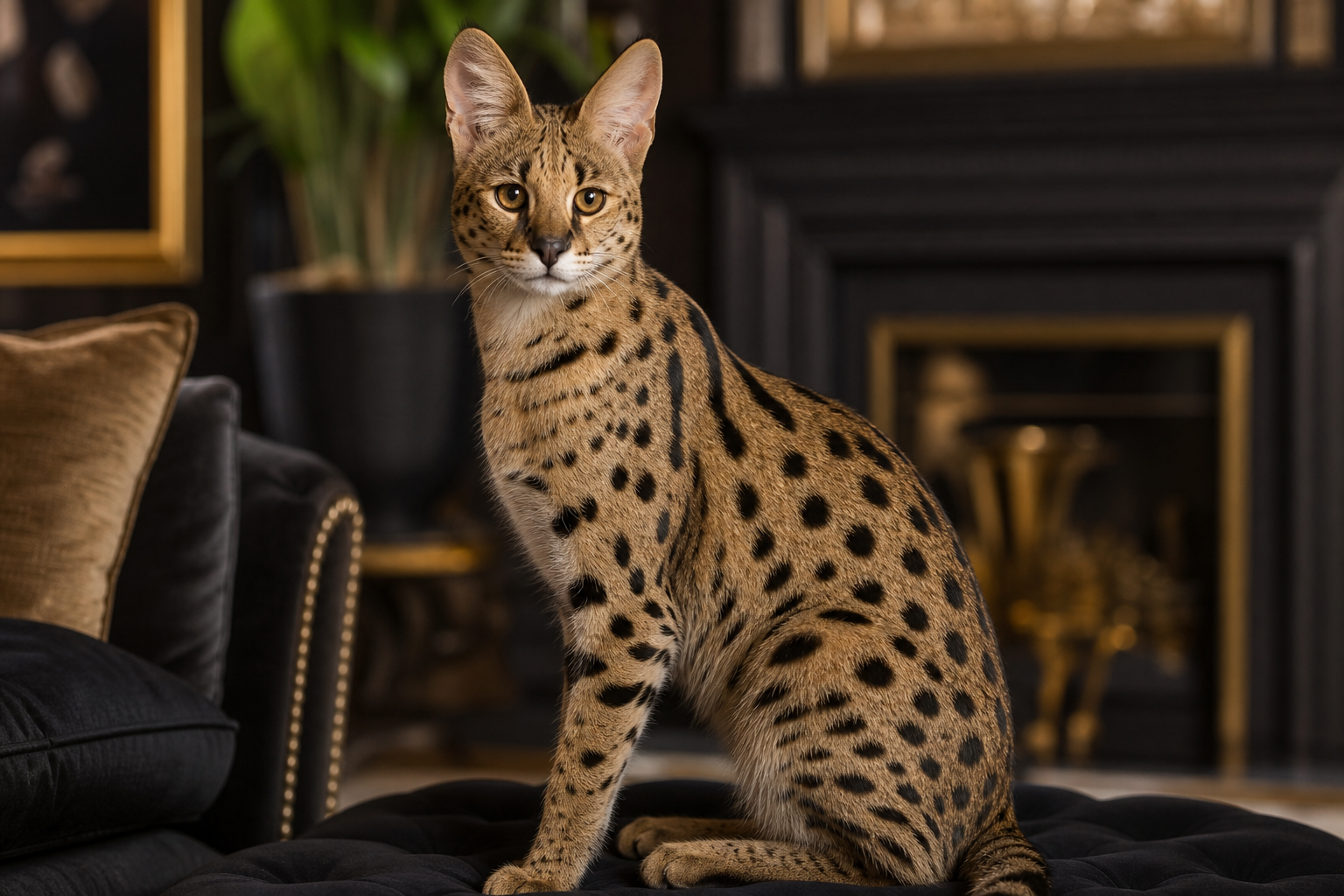
A serval cat is one of the most striking exotic felines in the world: tall, athletic, intensely intelligent, and unmistakably wild in both appearance and behavior. For buyers researching a serval cat, a serval f1 cat, or a serval mixed cat, the most important truth is this: servals are not simply “large spotted house cats.” They are wild African felines with highly specialized needs, major legal restrictions, and a level of care that goes far beyond conventional cat ownership.
For discerning buyers exploring the premium exotic cat world, servals often become the reference point for understanding why hybrids such as the Savannah can be more practical. At Elite Hybrid Cats, a TICA-registered cattery (TICA #115454), we specialize in exceptional hybrid felines and educate clients in the USA, Dubai, and worldwide on the real differences between true wild cats and refined hybrid companions.
Quick answer
A serval cat is a wild African feline, not a domesticated breed.
Servals require secure outdoor enclosures, exotic-animal veterinary care, specialized diets, and strict legal compliance.
They are best suited only for highly experienced exotic-animal keepers with space, budget, and long-term commitment.
For many affluent buyers seeking the serval look with a more manageable ownership experience, a well-bred Savannah HP F1 or Savannah F1 is often the more realistic choice.
Ownership laws vary widely by state, county, country, and HOA or insurance policy, so legal review must happen before any deposit or purchase.
A serval can be extraordinary to observe, but it is rarely the right fit for a standard luxury home environment.
"In captivity, servals have an average lifespan of approximately 22.4 years." - Animal Diversity Web
Overview of the serval cat
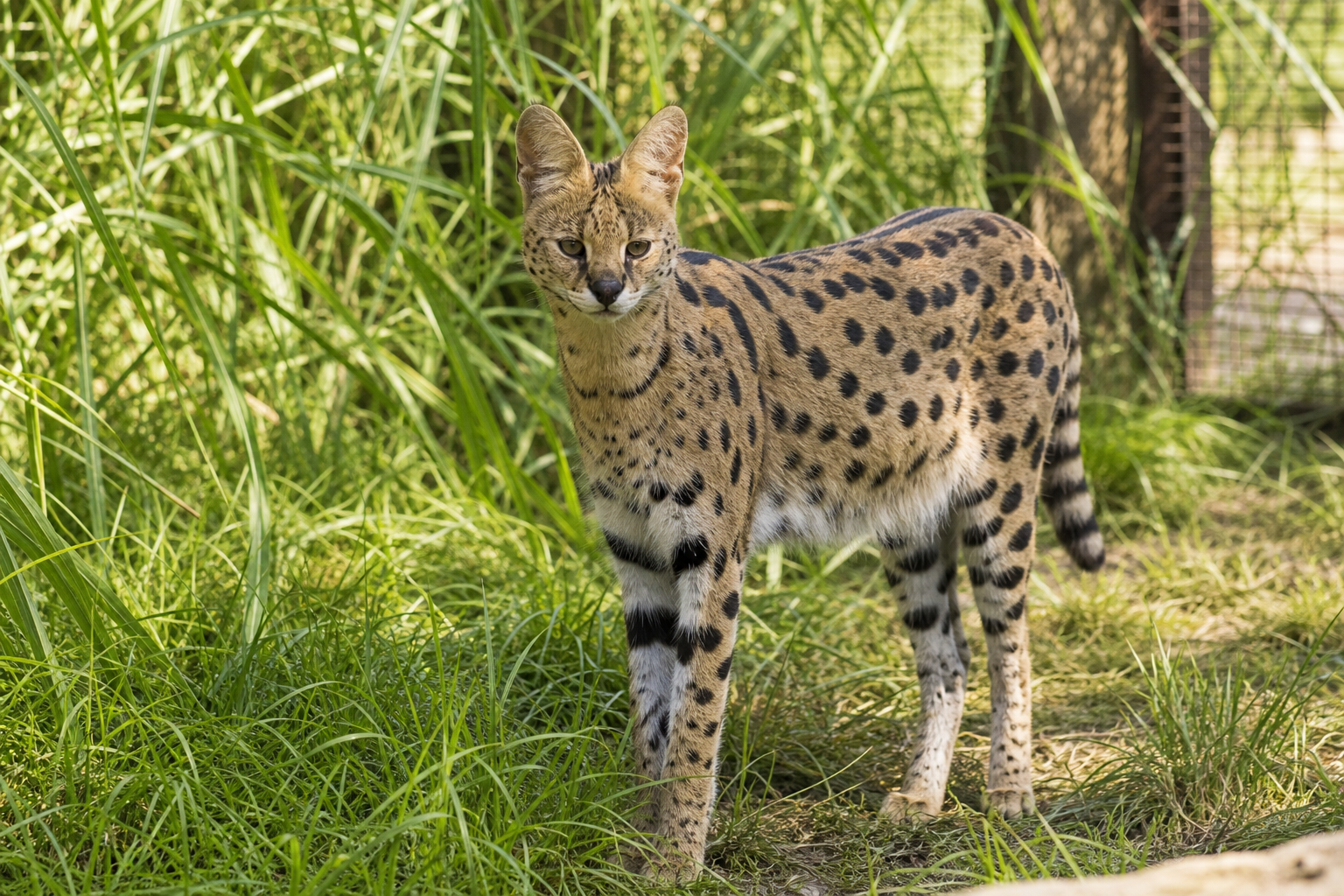
The serval (Leptailurus serval) is native to sub-Saharan Africa, where it lives primarily in grasslands, wetlands, and savanna regions with access to cover and prey. Its anatomy is specialized for hunting in tall grasses: oversized ears for precision hearing, exceptionally long legs for jumping, and a lean, powerful frame built for speed and pounce.
As an exotic pet, the serval occupies a unique category. It is neither a domestic cat nor a simple “alternative breed.” It remains a wild species with natural instincts that do not disappear because the animal was captive-bred.
That distinction matters. Many buyers initially researching a serval cat for sale are actually looking for three different things:
The authentic wild feline itself
A serval-influenced hybrid, often described informally as a serval mixed cat
A premium Savannah with high serval expression and a refined ownership profile
This is where expert breeder guidance matters. At Elite Hybrid Cats, we help clients separate aspiration from practicality, especially when comparing true servals with Savannah F2, Savannah F1, and Savannah HP F1 options.
Physical characteristics
Size, weight, coat, and lifespan
Servals are elegant rather than bulky. Their bodies are slim, long, and highly athletic.
Trait | Serval Cat |
|---|---|
Weight | Typically 19–44 lb |
Body type | Tall, lean, long-legged |
Coat | Short, golden to buff with black spots and stripes |
Ears | Very large, rounded, highly sensitive |
Tail | Relatively short compared to body |
Lifespan | Roughly 10–20+ years, often longer in captivity |
Their proportions are what make them so visually arresting. Relative to body size, servals have some of the longest legs and largest ears in the feline world. This gives them a dramatic, high-end, almost sculptural appearance that has inspired the development of luxury hybrid breeds.
Activity level and intelligence
A serval is not a relaxed decorative pet. It is an elite predator with extremely high physical and mental needs.
Expect:
Constant environmental scanning
Strong jumping and climbing behavior
Digging tendencies
Fast reaction speed
Problem-solving intelligence
High prey fixation
This intelligence is part of the appeal, but also part of the challenge. A bored serval does not simply nap more. It often becomes destructive, frustrated, noisy, or escape-motivated.
Temperament and behavior
Typical personality traits
Servals are generally:
Independent
Alert
Territorial
Highly intelligent
Selectively affectionate
Easily overstimulated
Instinct-driven
Some captive-raised servals can bond with a primary caretaker, but that does not make them domesticated. Many tolerate handling on their own terms and may be affectionate in brief, controlled moments. They are not reliably cuddly, guest-friendly, or family-oriented in the way domestic cats can be.
Socialization with humans, children, and other animals
Early socialization helps, but it does not erase species-level instincts. Servals are usually a poor fit for households with:
Young children
Elderly residents
Small dogs
Domestic cats
Birds, rabbits, reptiles, or other prey-type pets
Frequent visitors or busy household traffic
Even in affluent homes with abundant space, their unpredictability around movement, noise, and prey stimuli creates real risk.
Hunting drive and outdoor safety concerns
A serval’s prey drive is central to understanding ownership risk. These cats are built to stalk, leap, seize, and kill. Their hunting interest can be triggered by small pets, neighborhood wildlife, sudden movement, or even play scenarios that escalate too far.
Outdoor safety is not optional. A normal fenced yard is inadequate. Servals can jump vertically, climb, and dig. Escape prevention must be engineered, not improvised.
Legal considerations
Before considering acquisition, you must confirm the full legal status of serval ownership in your exact location.
Common legal restrictions
Depending on jurisdiction, serval ownership may involve:
Full prohibition
Exotic animal permits
Wildlife possession licenses
USDA-related transport or commercial requirements
Local zoning restrictions
HOA or community bans
Special caging inspections
Laws vary not just by state, but often by county, city, and neighborhood. What is legal in one part of the USA may be prohibited in another. The same is true internationally, including the UAE and Dubai, where import, quarantine, and ownership standards must be reviewed carefully.
For authoritative guidance, start with:
State wildlife agencies
Local municipal code offices
Insurance and liability issues
Many buyers overlook this step. Even if a serval is legal, your homeowner’s insurance, umbrella liability coverage, landlord agreement, or gated-community rules may exclude exotic animals. That can create serious financial exposure if the animal escapes, injures another animal, or causes property damage.
Housing and environment
Space requirements
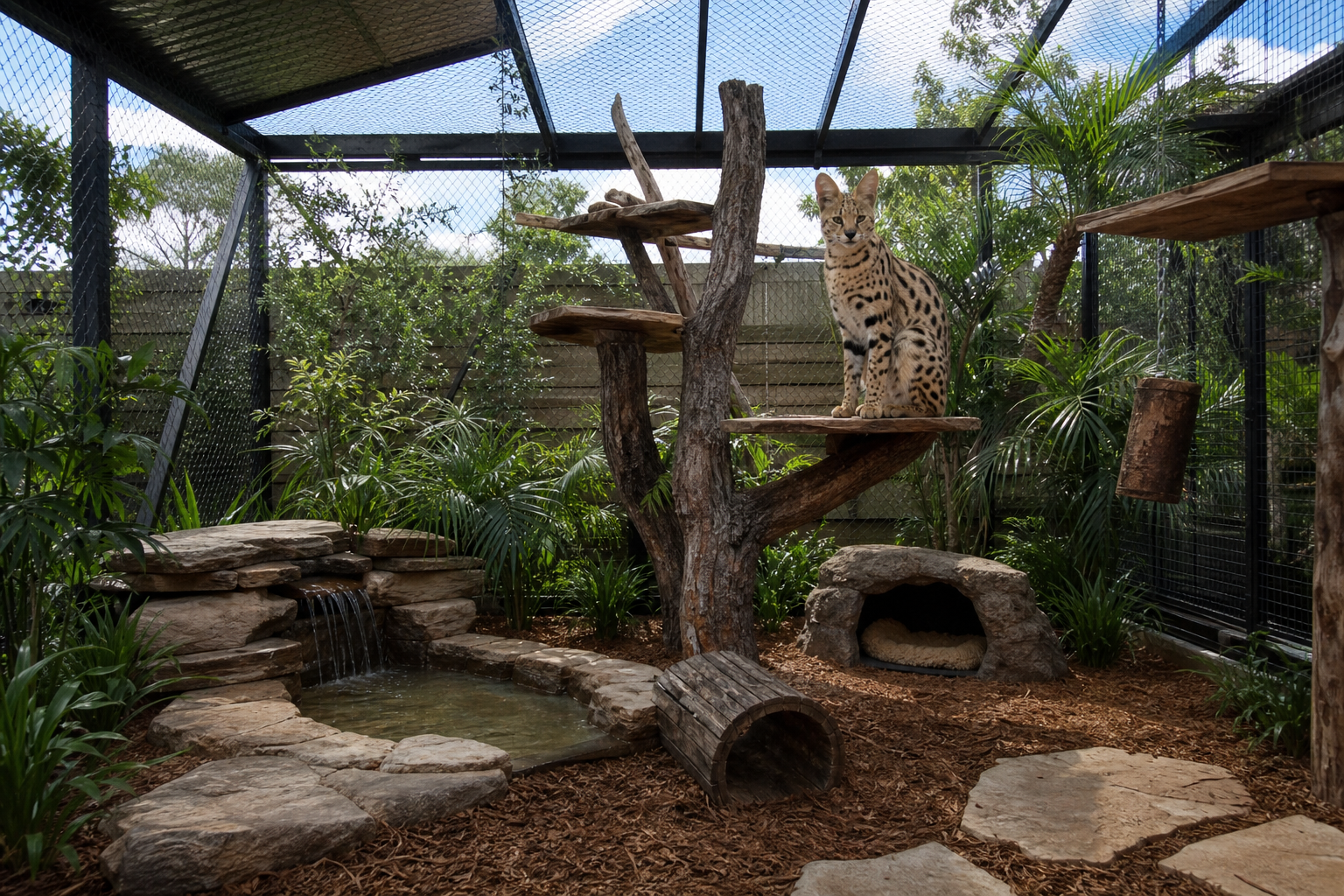
Servals need significantly more room than domestic cats or even most hybrids. A suitable setup generally includes:
A large, secure outdoor enclosure
Overhead containment
Dig-proof perimeter construction
Weather-appropriate shelter
Safe separation zones for cleaning and feeding
Indoor-only living is not appropriate for most servals. Even in large estates, the animal still needs a controlled, secure external habitat that allows movement, privacy, and expression of natural behaviors.
Environmental enrichment
A high-functioning serval enclosure should include:
Elevated platforms
Climbing structures
Hiding zones
Natural substrate
Logs and scratching areas
Puzzle feeding
Rotating enrichment items
Water features or shallow pools
Water is especially valuable because many servals are drawn to it and benefit from interactive environmental complexity.
Noise level and neighbor impact
Servals can vocalize with chirps, growls, hisses, and sharp cries. In a private rural property, this may be manageable. In upscale suburban neighborhoods, gated communities, or luxury urban-adjacent homes, it may quickly become a problem.
Care and daily needs
Recommended diet
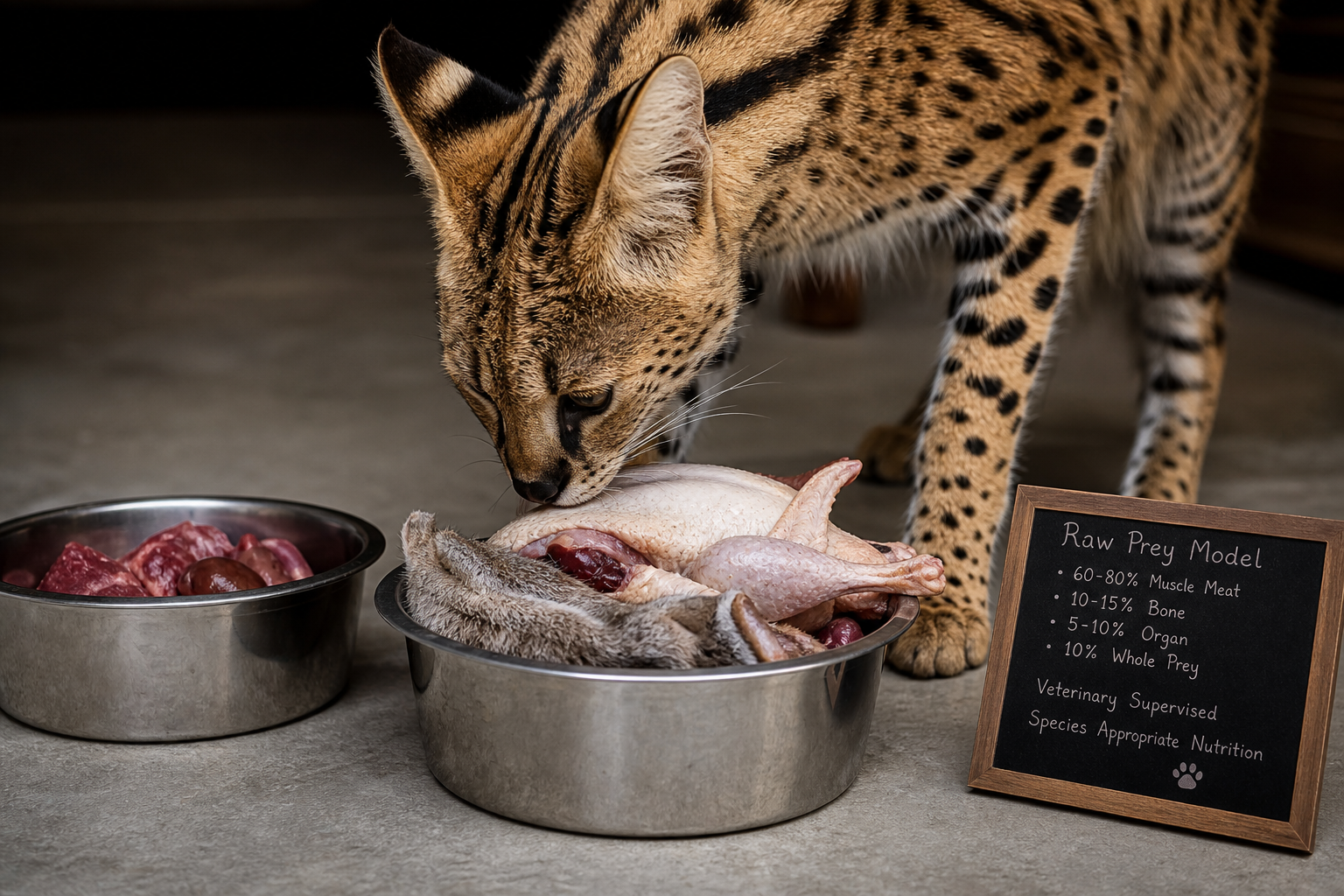
Servals require species-appropriate nutrition, typically centered around raw feeding and whole prey principles under veterinary supervision. Their diets may include:
Whole prey items
Raw meat formulations designed for exotic carnivores
Organ meats
Bone content
Supplemental nutrients when required
This is not an area for guesswork. Improper feeding can lead to deficiency, digestive issues, obesity, or skeletal problems. Exotic-animal veterinary input is essential.
Grooming needs
The short coat is low-maintenance, but grooming is not the main issue. Nail management, safe handling, and stress-free restraint are much more important. Routine maintenance is only easy if the animal has been conditioned early and handled by experienced people.
Litter box and hygiene considerations
One of the biggest content gaps in many serval articles is hygiene realism. Servals may use litter areas inconsistently and often mark territory with urine. This can make indoor living difficult or unacceptable for many households, especially those with luxury furnishings or shared family spaces.
Time commitment and interaction needs
Serval ownership is not passive. Daily time is needed for:
Feeding
Cleaning
Enrichment rotation
Behavioral monitoring
Secure handling protocols
Veterinary coordination
Containment checks
If your schedule includes frequent travel, social events, multiple residences, or heavy staff turnover, a serval may be impractical.
Health and veterinary care
Common health issues and concerns
Servals may face:
Nutritional imbalance from improper diet
Injury from escape attempts
Stress-related behavior issues
Parasite exposure
Gastrointestinal problems
Dental concerns
Foreign body ingestion
"Servals in captivity require specialized care to meet their physical and psychological needs." - Animal Diversity Web
A critical ownership issue is access to the right veterinarian before purchase, not after.
Vaccinations, parasite prevention, and routine care
Because protocols can vary for exotic felines, all preventive care should be coordinated through an experienced exotics veterinarian. That generally includes:
Vaccination guidance
Fecal testing
Parasite prevention
Annual or semiannual wellness exams
Weight and nutrition monitoring
Dental and oral health review
Finding an experienced exotic-animal veterinarian
This can be surprisingly difficult, even in affluent metro areas. Before buying a serval, confirm:
The clinic accepts wild felids
Emergency care exists within transport distance
Sedation protocols are available if needed
The vet is comfortable with nutrition, diagnostics, and long-term management
Costs of ownership
A serval’s purchase price is only the beginning.
Upfront costs
Potential upfront expenses may include:
Purchase from a reputable, legal source
Permits and licensing
Transport and import fees
Enclosure construction
Specialized containment hardware
Initial veterinary exams
Feeding equipment and enrichment setup
Ongoing costs
Monthly and annual costs often include:
Raw or whole prey diet
Veterinary care
Parasite prevention
Enrichment replacement
Repair and maintenance of enclosure
Liability or specialty insurance
Travel or staffing support for care coverage
Unexpected expenses
This category is where many unprepared owners fail. Unexpected expenses can include:
Emergency surgery
Escape recovery
Property damage
Legal compliance updates
Permit renewal issues
Behavioral consultation
Rehoming logistics
By contrast, many premium buyers who love the serval look but want a more sustainable ownership path often choose a luxury hybrid. At Elite Hybrid Cats, our clearly defined lines include:
Elite Hybrid Cats line | Typical price range | Best for |
|---|---|---|
$20,000–$50,000 | Buyers wanting maximum serval influence with premium exclusivity | |
$15,000–$25,000 | High-end hybrid buyers seeking dramatic look and more manageable ownership | |
$7,500–$15,000 | Buyers wanting exotic expression with a more adaptable home profile |
For pricing guidance and planning, see our price page.
Ethical and welfare considerations
Captive-bred vs. wild-caught
A legitimate ethical baseline is non-negotiable: never support wild-caught sourcing. Responsible acquisition requires lawful, documented, captive-bred animals only.
Welfare challenges
A major issue overlooked in basic rankings articles is quality of life. The question is not just whether a serval can survive in captivity. It is whether the owner can provide a life that is safe, enriched, legally compliant, and psychologically appropriate for a wild predator.
That is a high standard.
Responsible ownership and rehoming risks
Servals bond selectively, resist frequent changes, and can be very difficult to place if circumstances shift. Divorce, relocation, children, legal changes, and insurance issues commonly make owners reconsider. Rehoming a serval is vastly more complex than rehoming a domestic cat.
Who a serval cat is, and is not, suitable for
Best fit
A serval may be suitable only for someone who has:
Extensive exotic-animal experience
Significant land or specialized housing
Strong legal compliance discipline
Access to exotics veterinary care
High discretionary budget
Long-term stability
No vulnerable household pets or small children
Poor fit
A serval is usually not suitable for:
First-time exotic owners
Apartment or condo living
Frequent travelers
Family homes with mixed pets
Buyers wanting a cuddly companion animal
People attracted mainly by appearance
Serval vs domestic cats and hybrids
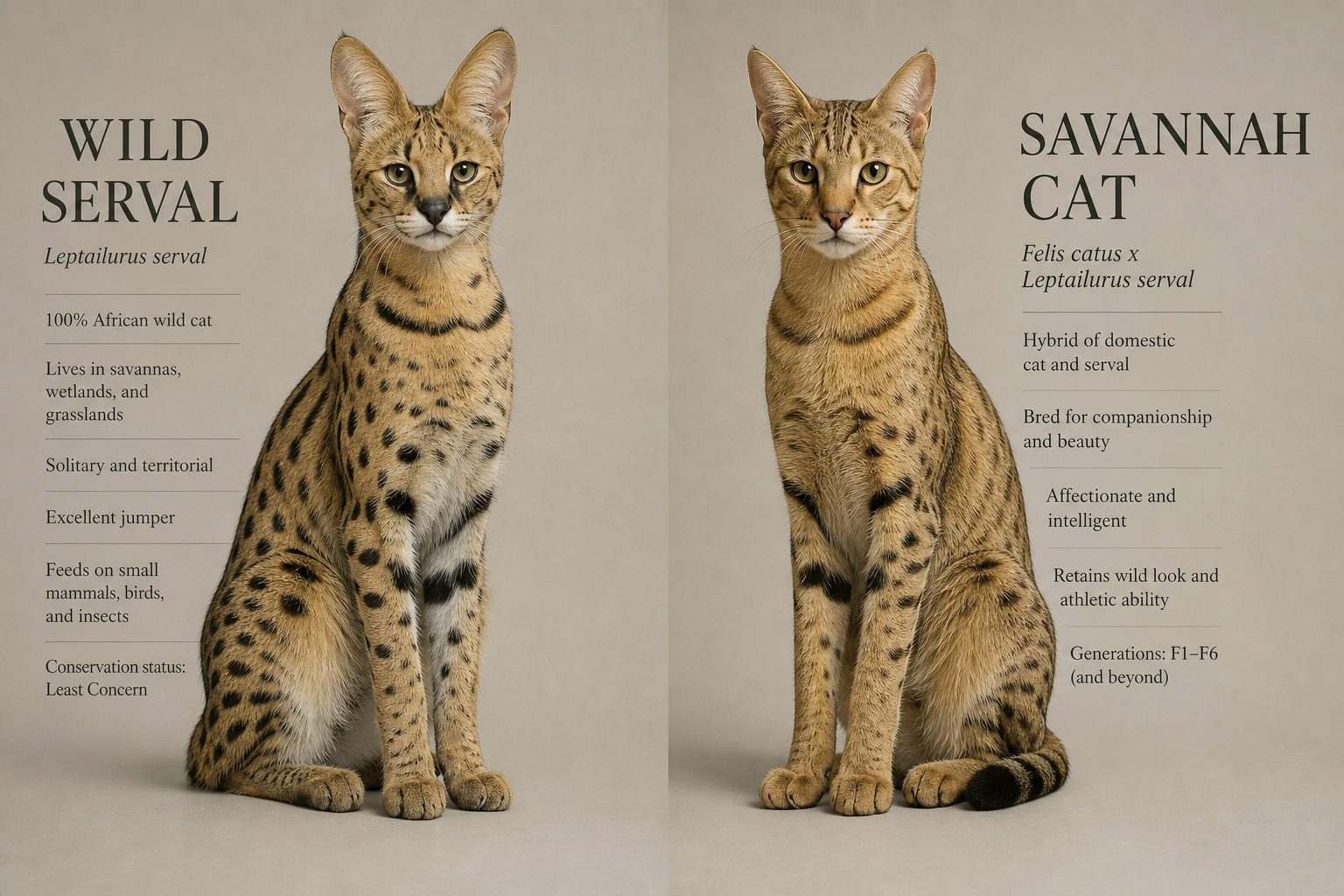
For many sophisticated buyers, the better question is not “Can I own a serval?” but “Should I choose a true wild cat or a premium hybrid with serval influence?”
Category | Serval | Savannah HP F1 / F1 / F2 |
|---|---|---|
Species status | Wild cat | Hybrid companion cat |
Legal complexity | High | Varies, generally more manageable |
Housing needs | Specialized enclosure essential | More adaptable to home life, depending on generation |
Diet complexity | High | More manageable with breeder and vet guidance |
Social adaptability | Limited | Better suited to companion ownership |
Family fit | Usually poor | Better, depending on home and generation |
Buyer profile | Expert exotic keeper | Premium buyer seeking exotic look with greater practicality |
If your goal is the prestige, athletic beauty, and rare visual impact of serval lineage without the full burden of true wild-cat ownership, reviewing the breed guide and current available kittens is a more productive next step.
Practical checklist before buying
Before moving forward with any serval cat or serval-influenced purchase, confirm the following.
Questions to ask the breeder or seller
Is the animal captive-bred and fully documented?
What permits or restrictions apply to my jurisdiction?
What veterinary records are available?
What diet has the animal been eating?
What socialization methods were used?
What containment standards are recommended?
Is there a written contract?
What happens if the animal must be rehomed?
Legal and housing checks
Confirm state and local legality
Check HOA, landlord, and insurance restrictions
Secure veterinary access
Build enclosure before acquisition
Plan transport lawfully
Budget and commitment checks
Can you fund both setup and emergency care?
Can you maintain this animal for 15–20+ years?
Do you have a backup caregiver?
Are you prepared for marking, noise, and behavioral unpredictability?
Is your interest based on reality, not just rarity?
Final verdict
A serval cat is a magnificent animal, but for most people, even very affluent buyers, it is not the right home companion. The beauty, rarity, and status appeal are undeniable, yet the legal exposure, specialized housing, prey drive, veterinary demands, and long-term welfare requirements place serval ownership in a narrow category suited only to highly prepared exotic-animal keepers.
For buyers who admire the serval’s look and presence but want a more realistic path, Elite Hybrid Cats offers a more refined solution through premium hybrid lines. As a TICA-registered cattery (#115454) with a focused program in Savannah HP F1, Savannah F1, and Savannah F2, plus rare color priorities including silver, we help clients in the USA, Dubai, and worldwide make informed, responsible decisions.
If you want expert guidance on whether a true serval, a serval-influenced hybrid, or a high-generation Savannah is the best fit for your lifestyle, review our breed guide or contact us for discreet, informed assistance.
Looking for a TICA-registered Savannah, Serval or Caracal?
Elite Hybrid Cats — TICA #115454 · Serving USA, Dubai & worldwide · 12+ years experience.
See available kittens →